Signage council approval in Sydney: when a business sign needs a DA
Which business signs can go straight up in NSW, which ones need development consent, and how landlords, strata and heritage rules fit in.
Before a new business sign goes up in Sydney, someone needs to answer one question: does this sign need council approval? For many small signs the answer is no, and it can go straight up. For lit signs, big signs, pylons, signs on heritage buildings and anything that looks like advertising, the answer is often yes. Getting it wrong can mean a sign you paid for has to come down.
This guide explains how signage council approval works for businesses in Sydney, in plain English. It’s general information, not legal or planning advice, and rules change, so always confirm the requirements for your site with your council or a town planner before you order.
The two kinds of sign
Planning rules in NSW treat two kinds of sign very differently.
Business identification signs tell people who you are and what you do at that address: your name, logo, trading hours and what you sell. This is what almost every shop, office, clinic and warehouse needs.
Advertising signs promote something that isn’t sold at the site, like a billboard for a car brand or a third-party poster panel. These are much more tightly controlled and nearly always need consent, often with extra assessment.
Everything in the rest of this guide is about business identification signs, because that’s what most businesses are putting up.
Exempt signs: no approval needed
NSW has a set of state-wide planning rules for minor building work, the Codes SEPP, which lists types of work that are “exempt development”. Exempt work can go ahead without a development application, as long as it meets every standard set for that type of work.
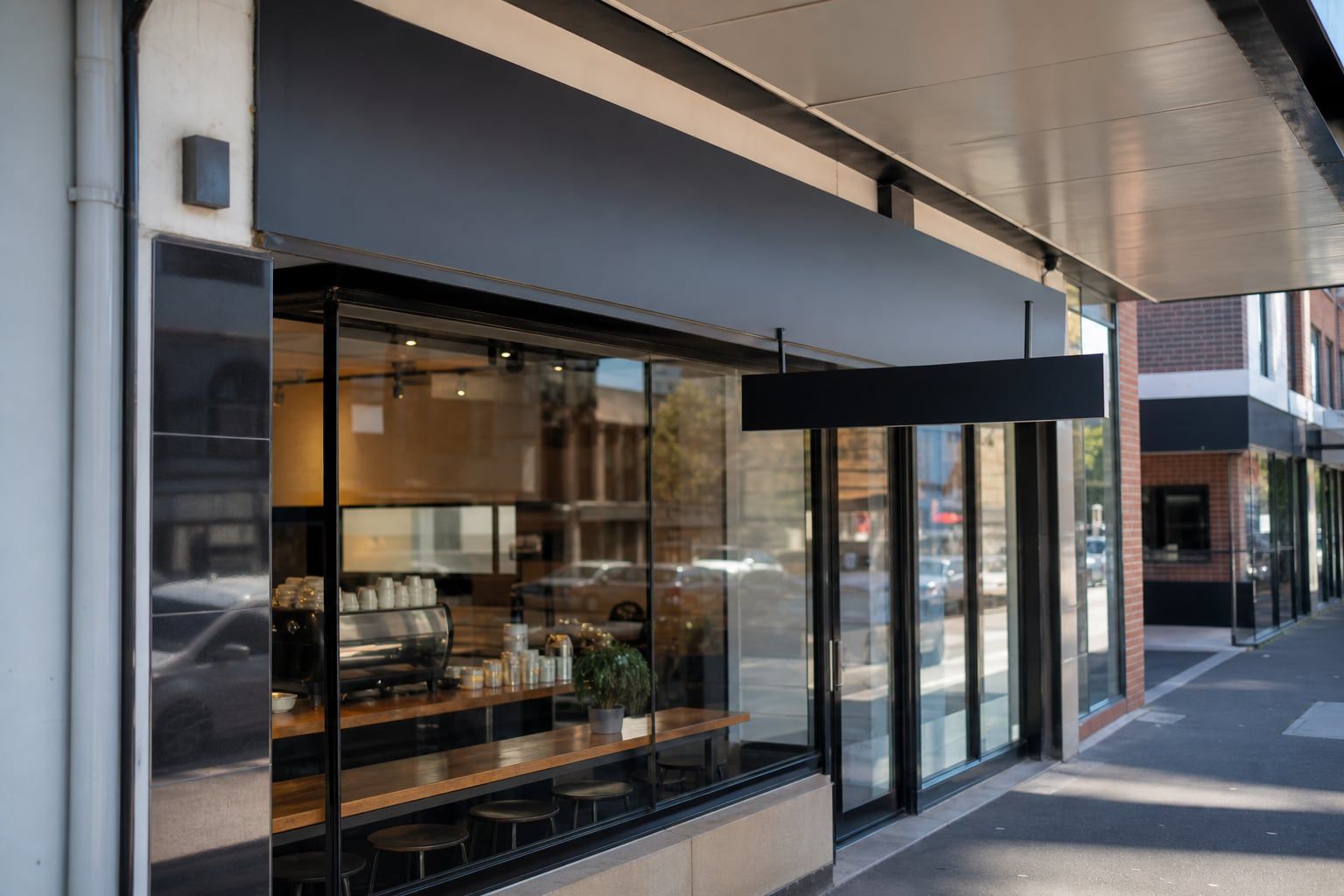
Many common business signs fall under the exempt rules, such as fascia signs, under-awning signs and window signs, provided they stay within limits on things like:
- The size and number of signs on the frontage
- How high the sign sits and how far it projects
- Whether it’s lit, and how
- Whether it’s above the roof or awning line
- Clearance above the footpath for hanging and projecting signs
If a sign meets all the standards, it’s exempt. If it misses even one, it isn’t, and it needs consent. The exact numbers are in the legislation and change from time to time, so a signmaker or planner should check your design against the current version.
When a sign usually needs consent
These are the common situations where a sign falls outside the exempt rules and needs a development application or other approval:
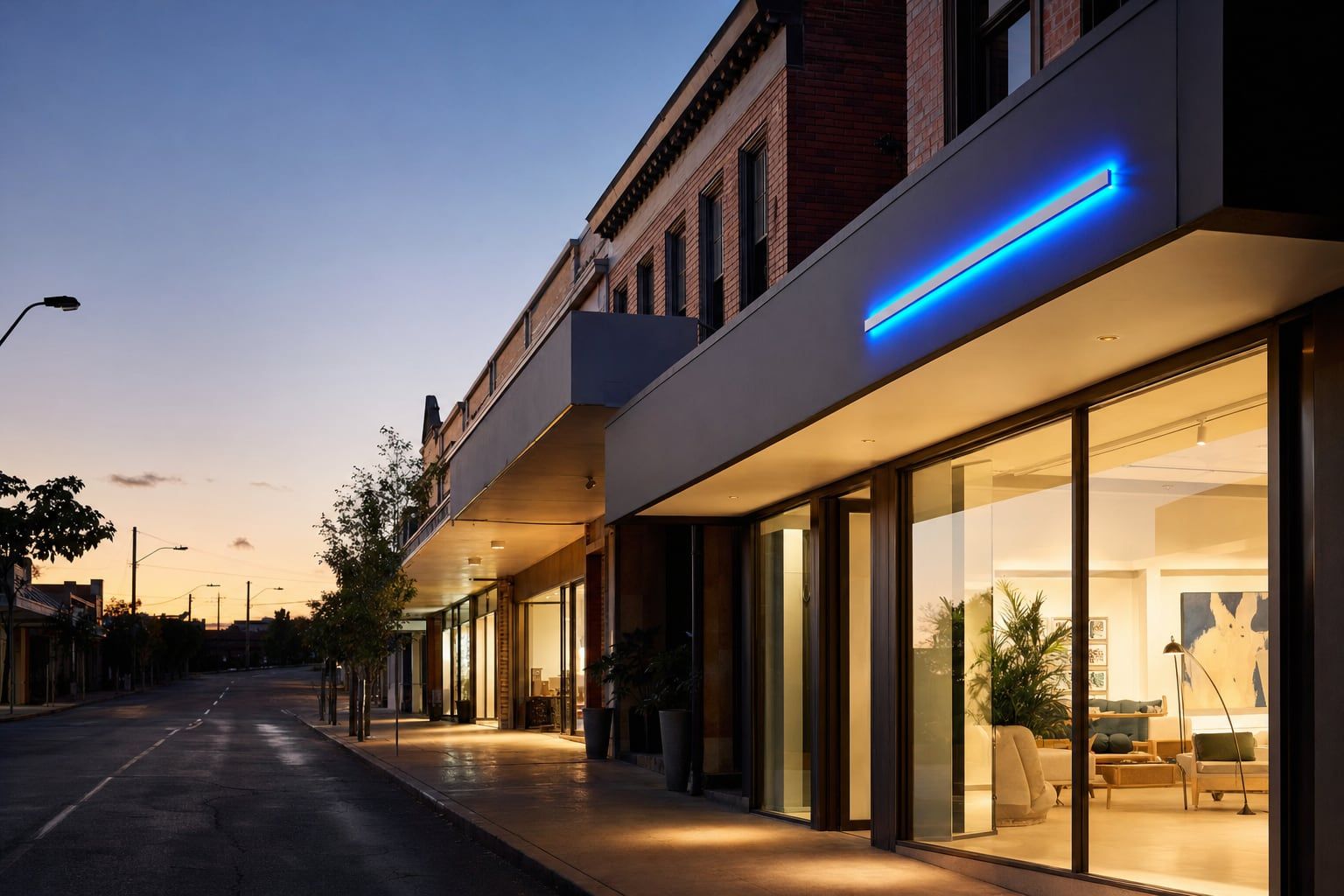
Illuminated signs. Lighting is one of the most common reasons a sign needs consent, particularly near homes. Councils consider brightness, light spill and hours of operation. See our page on LED signs for how we plan lit signs with this in mind.
Big signs. Signs over the size limits for the frontage, or more signs than the rules allow.
Roof and high-level signs. Signs above the roofline or high on a building face.
Pylons and freestanding signs. Most pylon signs need consent because of their height, size and effect on the street and traffic.
Heritage items and heritage conservation areas. Many of Sydney’s shopping strips sit in heritage conservation areas, from Paddington and Balmain to parts of Parramatta, Leichhardt, Glebe and the Blue Mountains town centres. Exempt rules often don’t apply to heritage-listed buildings, and councils look closely at signs that would hide original features like parapets, shopfront joinery or old painted signs.
Signs near major roads. Signs visible from main roads can raise road safety questions, and some need input from Transport for NSW.
Council rules on top of the state rules
Each council also has its own local environmental plan (LEP) and development control plan (DCP). These set out where different signs are allowed and what councils expect when they assess a sign, such as how many signs a shopfront can have, preferred positions on heritage strips, and how lit signs should be designed. A sign that needs consent will be assessed against these, as well as state-wide signage criteria.
This is why the same sign can be simple in one suburb and harder in another. A lightbox in an industrial estate in Smithfield is a very different proposition from the same lightbox on a heritage-listed terrace shop in Newtown.
Landlords, strata and shopping centres
Council is only one approval. Before any sign goes up, you’ll usually need consent from:
- Your landlord. Most commercial leases require written approval for signs, and many set out what’s allowed on the building.
- The owners corporation. In strata buildings, external signs often need owners corporation approval under the by-laws.
- Centre management. Shopping centres and some business parks have design guidelines covering fonts, sizes, colours and lighting for tenant signs, and approve every sign before it’s made.
These approvals usually ask for a drawing showing the sign on the building, with dimensions, materials, lighting and fixing method. We supply these as part of any shop signs job.
How to apply when consent is needed
If your sign needs development consent, the application is lodged through the NSW Planning Portal. A typical signage application includes:
- Plans and elevations showing the sign on the building, with dimensions
- A photomontage of the sign in place
- Details of materials, colours and any lighting
- A statement explaining how the sign meets the planning controls
- Owner’s consent, if you don’t own the building
Assessment times vary between councils and with the complexity of the sign. A straightforward sign might take several weeks; a large lit sign or a pylon on a busy road can take longer. Build that time into your opening date.
Sometimes the quicker route is to adjust the design so it fits the exempt rules, for example by reducing the size or dropping the internal lighting. A good signmaker will tell you if a small change avoids an application altogether.
A simple checklist before you order
- Is it a business identification sign, or advertising?
- Is the building heritage-listed, or in a heritage conservation area?
- Is the sign lit?
- Does it go above the awning, the roofline or the top of the wall?
- Is it freestanding, like a pylon or monument sign?
- How many signs are already on the frontage?
- Do you have landlord, strata or centre approval in writing?
If the answer to 2 to 5 is no, and you have your landlord’s approval, there’s a good chance the sign is exempt. If any answer is yes, check before you order.
How we handle it
For every job, we check approvals before you pay for manufacturing. We’ll tell you whether your design looks exempt, needs consent, or could be changed to avoid an application, and we’ll prepare the drawings and photomontages your landlord, strata or council need. Where a development application is required, we work with you or your planner to put it together.
See the full range of Sydney signage we design and install, or read about sign installation.
Updated
Signage council approval in Sydney: common questions
Something else on your mind? Call 0451 784 402 and ask.
Can I just replace my old sign with a new one the same size?
Often, yes, but not always. If the old sign was approved, a like-for-like replacement may be straightforward. If the new sign is lit, bigger, in a different position or on a heritage building, check first.
Who checks whether my sign is exempt?
You're responsible for making sure it meets the exempt development standards. A signmaker, a town planner or your council can help you check. If it doesn't meet them, you need consent.
What happens if I put up a sign without approval?
Council can order it removed or altered, and fines can apply. It can also cause problems with your landlord or when you sell the business.
Do window decals need approval?
Window graphics inside the glass are often exempt within limits, but rules on how much of the window can be covered vary. Check with your council if you plan to cover most of the glass.