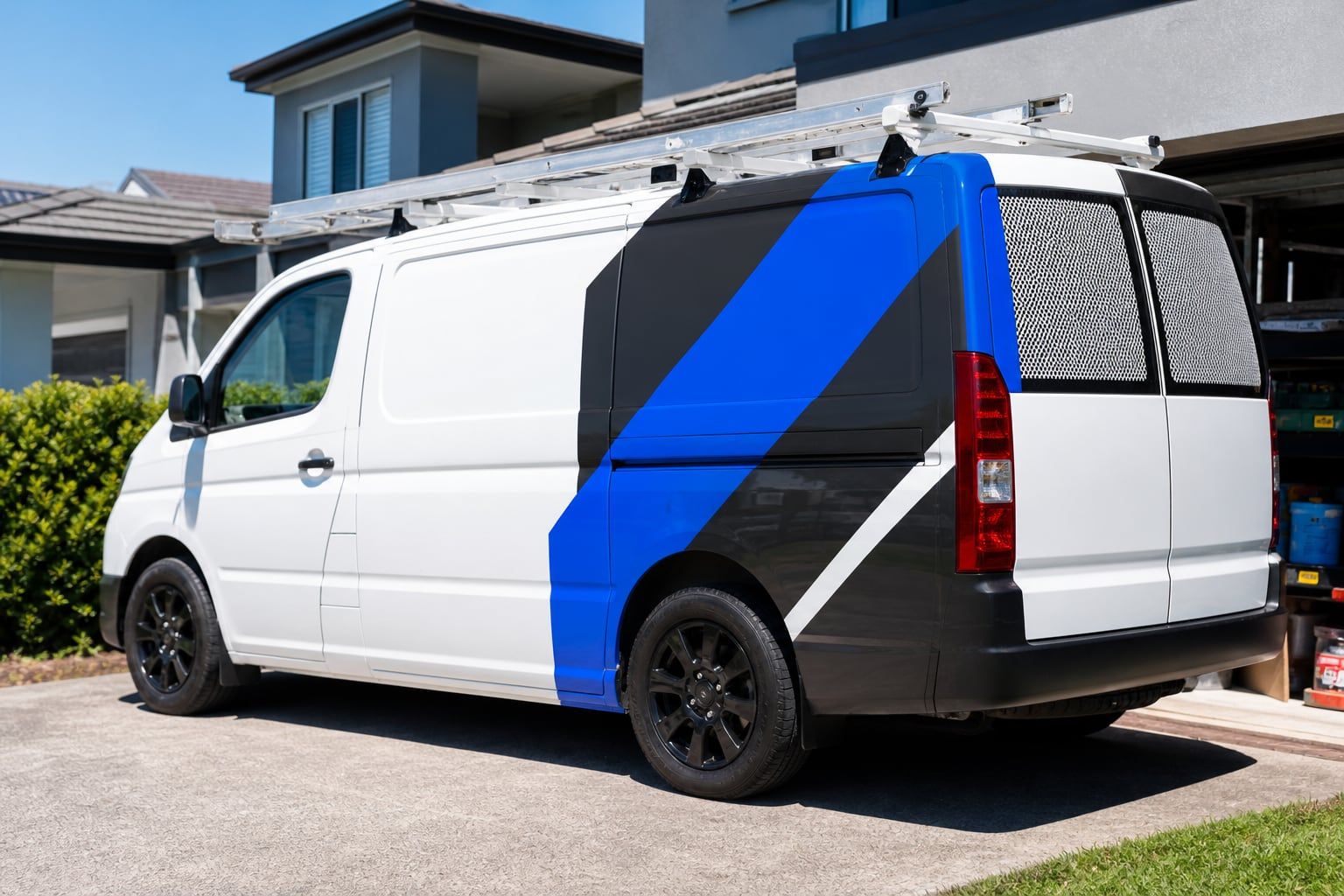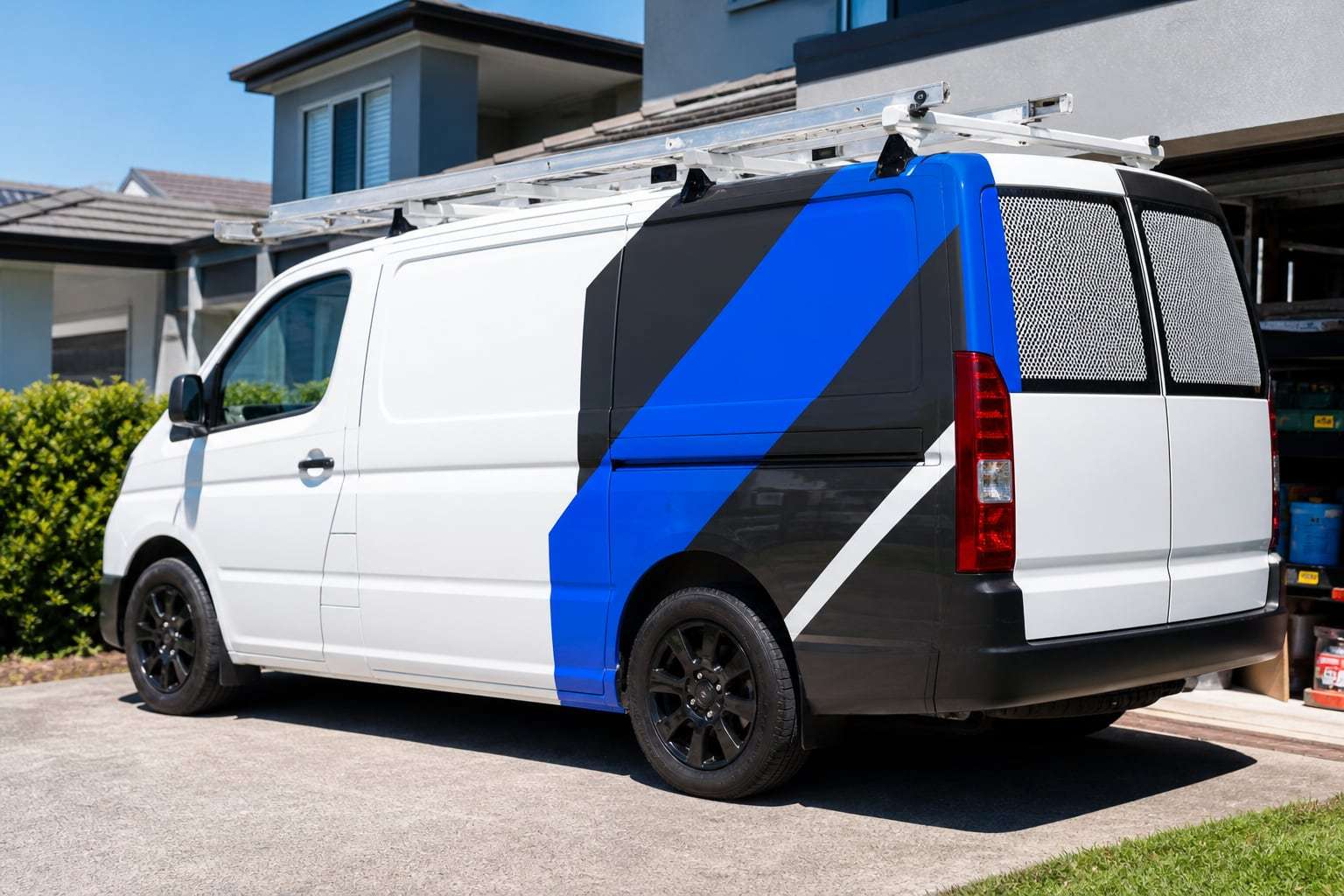
Work van signage in Sydney: signwriting, part wraps or a full wrap?
How to choose between cut vinyl signwriting, a part wrap and a full wrap for a work van, what to put on it, and how to keep it looking good.
For most trade businesses in Sydney, the van is the biggest piece of advertising they own. It’s outside every job, it’s in traffic on the M4 and the M5 every morning, and it’s parked in the street every night. Work van signage done well brings in calls for years. Done badly, it’s an expensive way to look cheap.
This guide walks through the choices: cut vinyl signwriting, a part wrap or a full wrap, what to put on the van, and how to keep it looking good.
Option 1: cut vinyl signwriting
Cut vinyl is letters and shapes cut from solid-colour vinyl and applied to the van’s paint. It’s how most work vans have been signwritten for decades.
Good for: a clean, simple look with your logo, business name, services, phone and web address. Solid-colour logos.
Pros: the lowest cost, quick to apply, easy to update when your phone number or services change, and a white van stays a white van underneath.
Cons: limited to solid colours, so photos and gradients aren’t possible. Less impact than a printed wrap.
For many tradies, a well-designed cut vinyl layout is all they need. The key is big, readable text and good placement, not the amount of vinyl.
Option 2: a part wrap
A part wrap is printed vinyl covering a section of the van, often the rear half, the lower sides or a band along the panels, blended into the van’s paint colour.
Good for: businesses that want full-colour graphics and real presence on the road without the cost of covering the whole van.
Pros: photos, gradients and brand colours, most of the impact of a full wrap for less.
Cons: the design has to work with the van’s paint colour, and there’s a visible edge where the wrap stops.
Option 3: a full wrap
A full wrap covers the whole painted body in printed vinyl.
Good for: strong brands, fleets that need to stand out, and vans that need to look completely different from their factory colour.
Pros: maximum impact, any design, and the paint underneath is protected from stone chips and sun.
Cons: the highest cost, and the most to replace if the van is damaged.
Our car wraps page goes into the materials and process in more detail.
What to put on the van
Less is more. People read a van for a few seconds, usually from behind or alongside in traffic. The essentials are:
- Your business name or logo, big enough to read from a car length or two away.
- What you do, in a few words: “Electrician”, “Plumbing and gas”, “Landscaping”. People need to know instantly.
- A phone number, large, especially on the back doors.
- Your website, short and simple.
- One line that sets you apart, if you have one, such as your service area or a licence type that matters to customers. Licence numbers shown on vehicles must be accurate and current.
Leave out long lists of services, small print and social media handles. Nobody can read them in traffic, and they clutter the layout.
Layout matters more than design
A great design laid out badly is wasted. On every van, plan for:
- The back doors. This is the side people stare at in traffic, so the phone number and business name should be biggest here.
- Door handles, fuel caps, rub strips and panel gaps. Text across a door handle or folded into a gap is hard to read and looks careless.
- Sliding doors. When the side door is open on a job, part of the side layout disappears. Keep the essentials on the panel that stays visible.
- Roof racks, ladders and toolboxes. Ladders on a roof rack can hide anything high on the sides.
- Windows. Rear windows can carry perforated one-way film, but keep the driver’s view in mind.
We lay out every van on a scaled template for its exact make and model, so these are all accounted for before printing.
Sun, paint and leases
Sydney’s UV is tough on vinyl, especially on vans that live outside on driveways in western Sydney. Cast vinyl with a protective laminate lasts much longer than cheap film on curves and in full sun. The roof and bonnet take the most punishment.
The van’s paint condition matters too. On sound factory paint, vinyl goes on and comes off cleanly. On resprayed panels or paint that’s already peeling, removing vinyl later can lift the paint with it. If the van is leased, check the lease terms; signage can usually be removed at the end, as long as it was applied to good paint.
Fleets
When you have more than one vehicle, consistency is what makes a fleet look professional. Keep the same layout, sizes and colours across every van, and store the files and templates so a vehicle added next year matches. Different models need their own templates, but the design should feel the same on a van, a ute and a truck.
Utes, trucks and trailers
The same thinking applies to other work vehicles, with a few differences. On a ute, the tub sides and tailgate are small, so the doors carry most of the message and a canopy or toolbox gives you extra flat panels to use. Trucks have big, flat box sides that suit a bold full-colour graphic and very large lettering, readable from well down the road. Trailers are often the most overlooked surface of all: a trailer parked at a job site or outside a market works as a mobile billboard for very little cost.
Track the calls
A van is one of the few pieces of advertising whose results you can measure, if you put a dedicated tracking number on it. You’ll see exactly how many calls it brings in, which makes it easy to judge whether a full wrap is paying its way.
Make it match
Your van, your shopfront, your site signs and your uniforms should all look like the same business. If you’re rebranding, do your shop signs and corflute signs from the same artwork at the same time.
See all the Sydney signage we design, make and install.
Updated
Work van signage in Sydney: common questions
Something else on your mind? Call 0451 784 402 and ask.
Which is cheapest: signwriting or a wrap?
Cut vinyl signwriting is usually the cheapest, a part wrap sits in the middle, and a full wrap costs the most because it uses the most material and labour.
Can I take the signage off when I sell the van?
Yes. Vinyl can be removed with heat, and the adhesive cleaned off. On sound factory paint it comes off cleanly. On resprayed or damaged paint, there's a risk of lifting paint.
Should I put my mobile number or a landline on the van?
Whichever you'll answer while driving to jobs. Many businesses use a dedicated tracking number on the van, so they know how many calls it brings in.
Do magnetic signs work?
They're handy for a vehicle that's also used privately, but they can blow off at speed, trap dirt that scratches the paint, and look less permanent than signwriting.